


Alcoa Aluminum – 1965
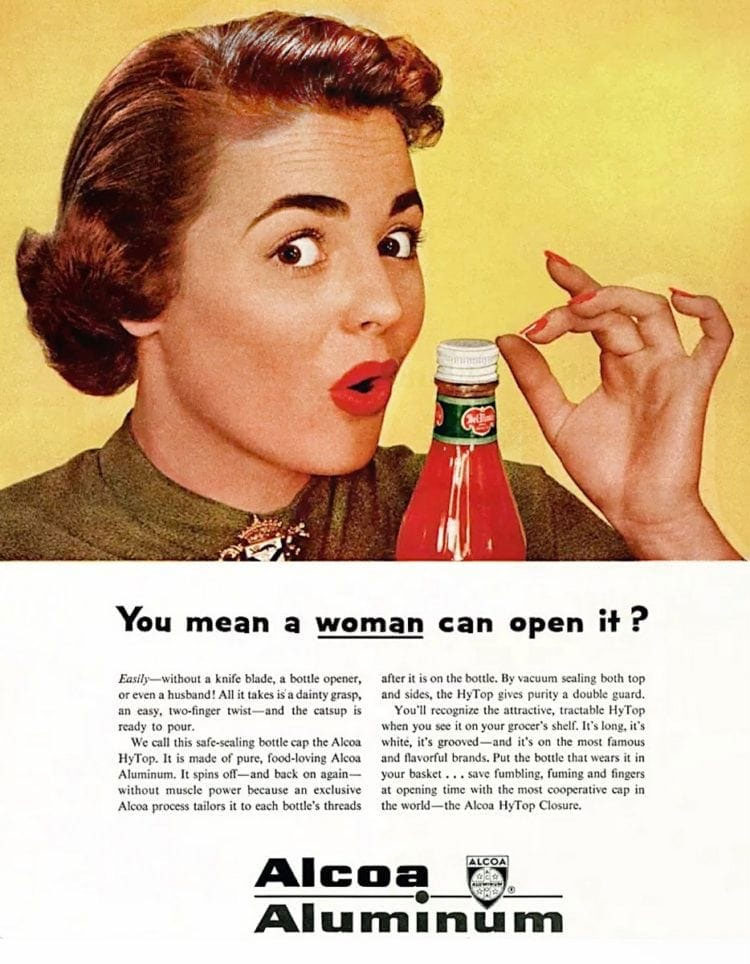
This ad touts the simplicity of opening up Alcoa Aluminum Caps. The problem is that when they said “you mean a woman can open it?” it implies that “even” the “weaker” members of society would be open to successfully open these bottle caps, which is really silly. However, that was the rhetoric in 1965.
Alcoa Aluminum 1965
McDonald’s - 1965
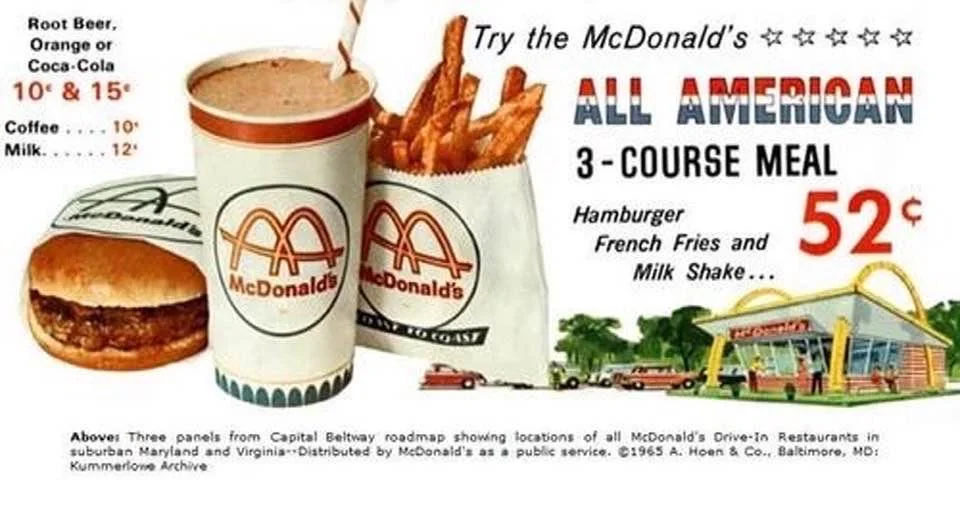
This ad isn’t actually sexist, but shows another major way how times have changed. In the ad, you can see that an “All-American” meal that included a hamburger, french fries, and a milkshake all cost just 52 cents. You could then add a drink for between 10 cent and 15 cents, meaning an entire meal would cost you less than $1.
McDonald’s - 1965
Tipalet - 1960s
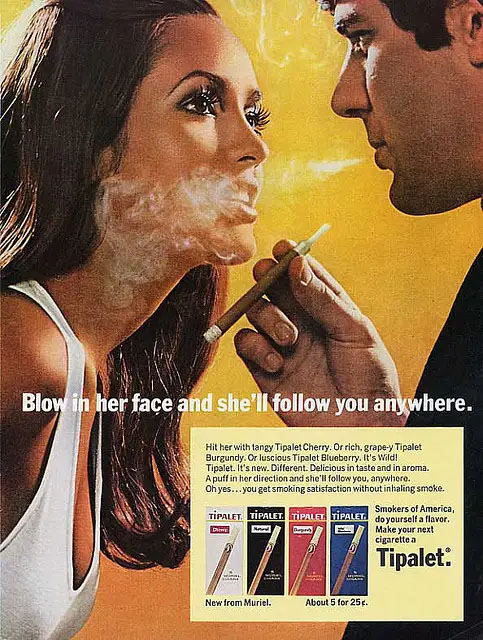
This is probably one of the worst offenders when it comes to chauvinistic ads. This Tipalet flavored cigarettes advertisement quite literally instructs men to blow cigarette smoke into women’s faces, promising that this would actually bring good results as opposed to the more realistic slap in the face. Not only is this a terrible message, but on top of that, cigarettes are extremely unhealthy.
Tipalet 1960s
Schlitz Beer - 1960s
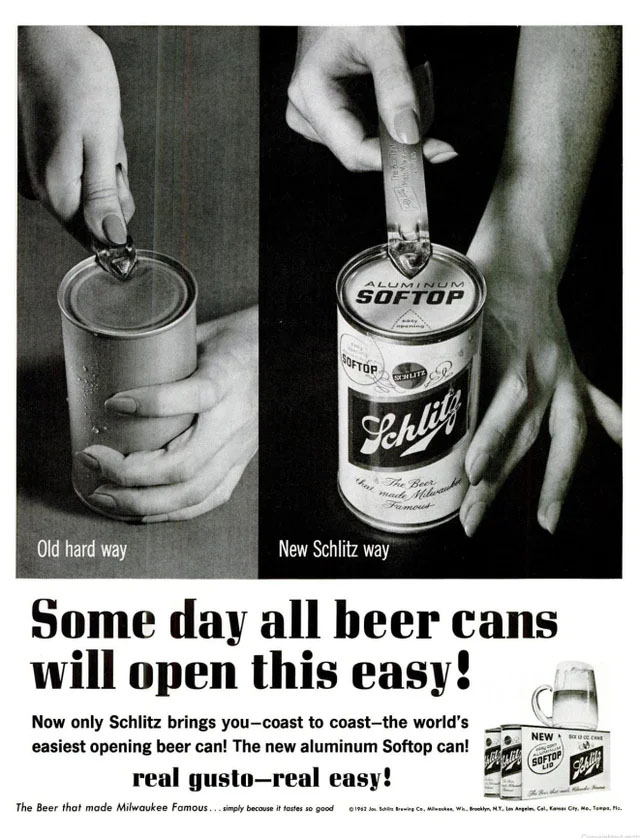
Schlitz Beer ran this advertisement that shows that once upon a time, pop tabs were not the default. In fact, Schlitz’s ad is saying that their can is much easier to open with a can opener thanks to their aluminum soft top. Using a can opener to open a can of beer has long not been an issue, so this is interesting to see.
Schlitz Beer 1960s
Columbia Records - 1970s
It’s pretty crazy to think but in the 1970’s, you could actually receive 13 tapes or records just only one dollar. While joining a record club might be old news, the most similar thing we have today is a subscription box. However, you’d be hard pressed to find a subscription box for anything for just one dollar.
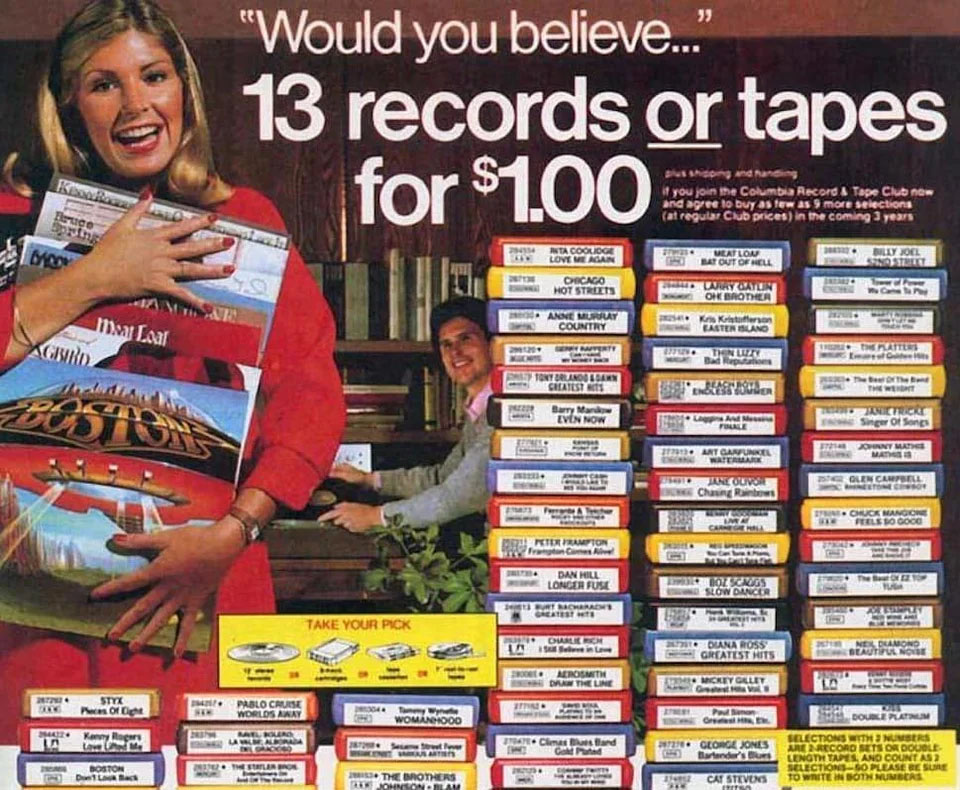
Columbia Records 1970s
Ohio Carriage Company - 1900s
While it might seem crazy to us that a company would be explicitly advertising that there are “no boy or girl laborers employed,” it’s a sign of the times, since back then, child labor was quite common. Today, we tend to take it as a given, although many companies do still employ children overseas, and also criminally underpay them.
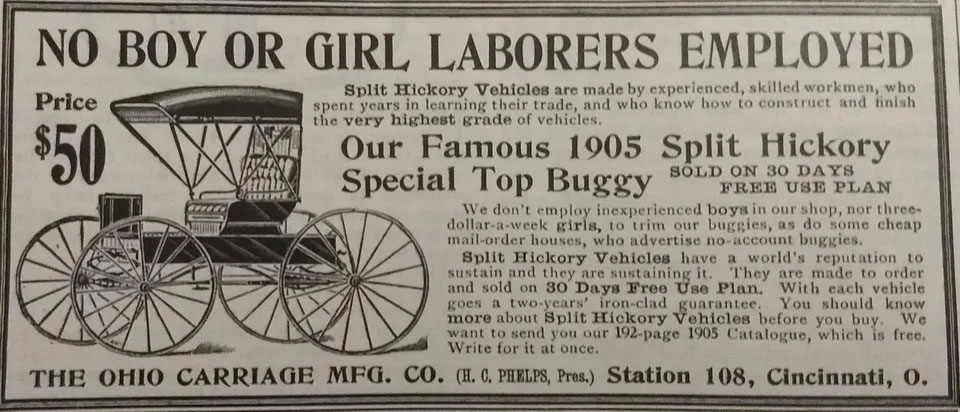
Ohio Carriage Company 1900s
7-Up - 1960s
A lot of changed since this 7-Up ad came out, and we highly doubt that a soda company could release an ad that flat-out claims that the drink can provide you with enough energy to help you bowl or play ping pong better. Another bizarre part of this ad is the girl’s pose, which seems totally out of place.
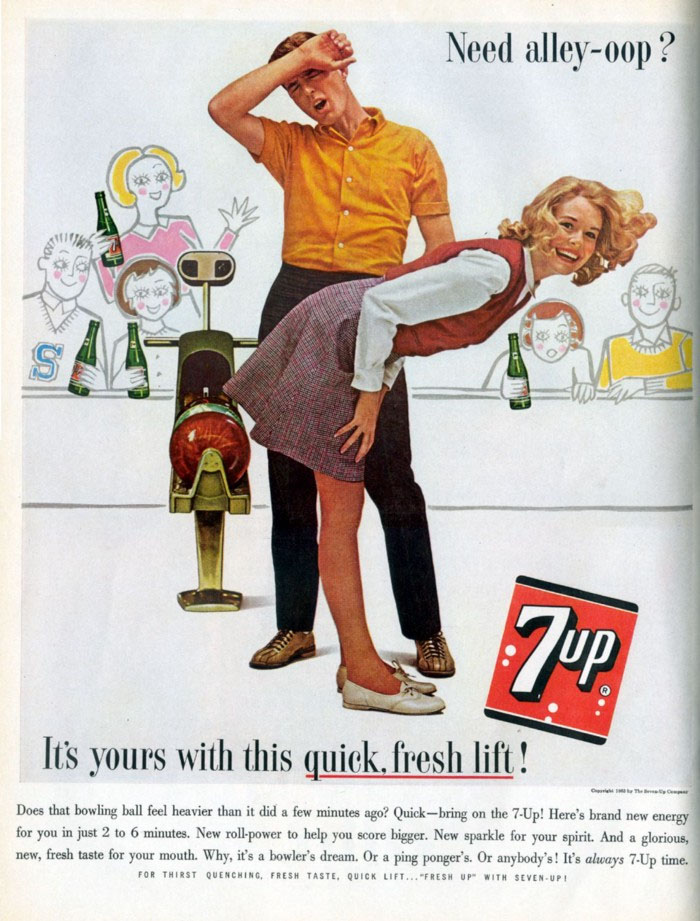
7 Up 1960s
Marilyn Monroe Firework Safety - 1950s
For some reason, Marilyn Monroe was hired for this ad to help try promote safety during the 4th of July, mainly due to the fireworks. Why a seductive Marilyn Monroe in a bathing suit is the best choice is beyond us, but we’re guessing this would have caught a lot of attention, so maybe it did end up working!
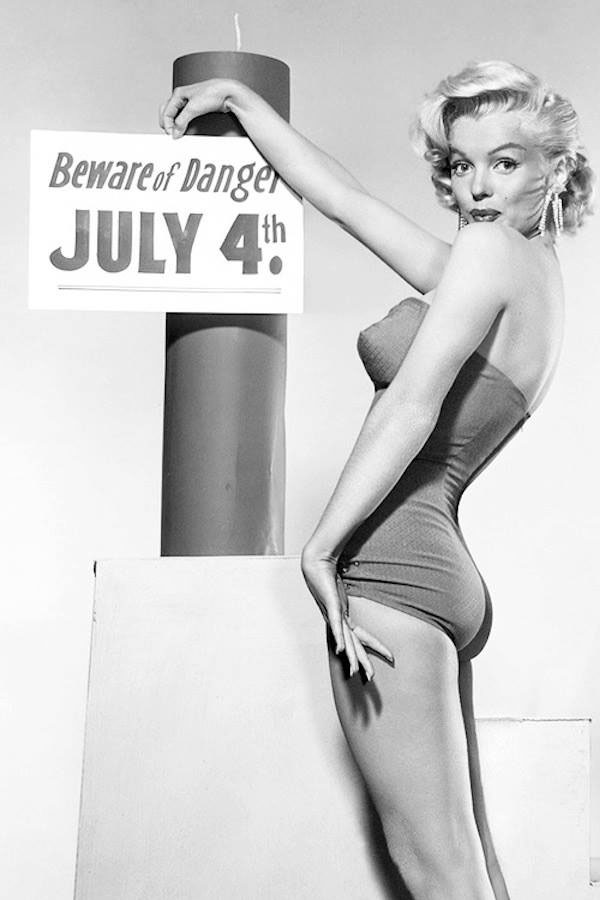
Marilyn Monroe Firework Safety 1950s
General Electric - 1980s
Here we see an old advertisement from General Electric advertising a brand new feature for your alarm clock: the “snooze” button. While we now take this feature for granted on our phones, this was not always the case, way before phone alarm clocks and even at first with these old digital clocks.
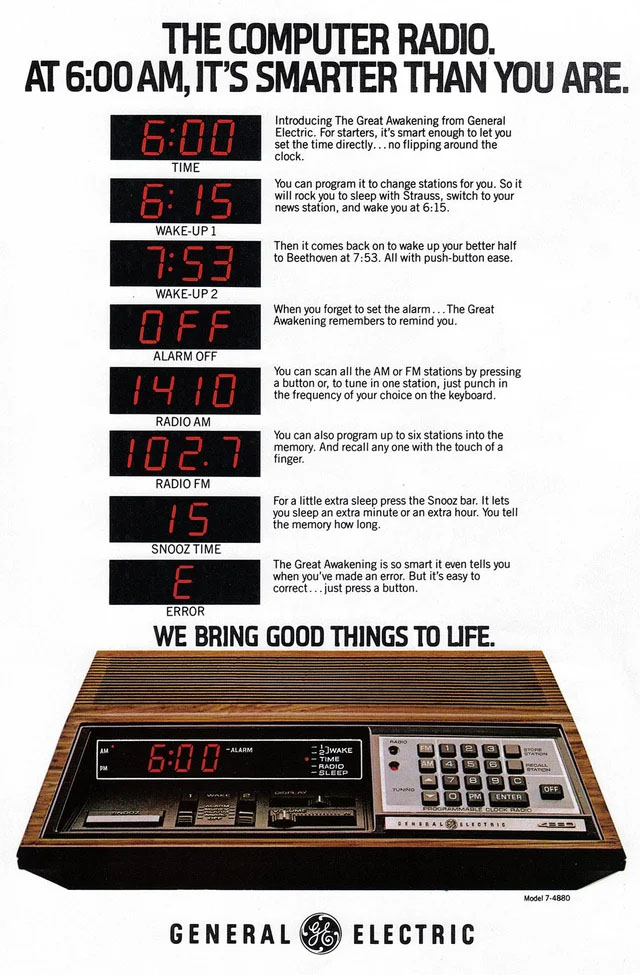
General Electric 1980s
Modern Hair Styling - 1950s
In this ad, we can see what the most stylish and modern hairstyles for men were in the 1950’s. A lot of these have come in and out of style throughout the years, and it’s interesting to see how styles always tend to cycle in and out of fashion. A lot of these hairstyles are now acceptable for women as well.
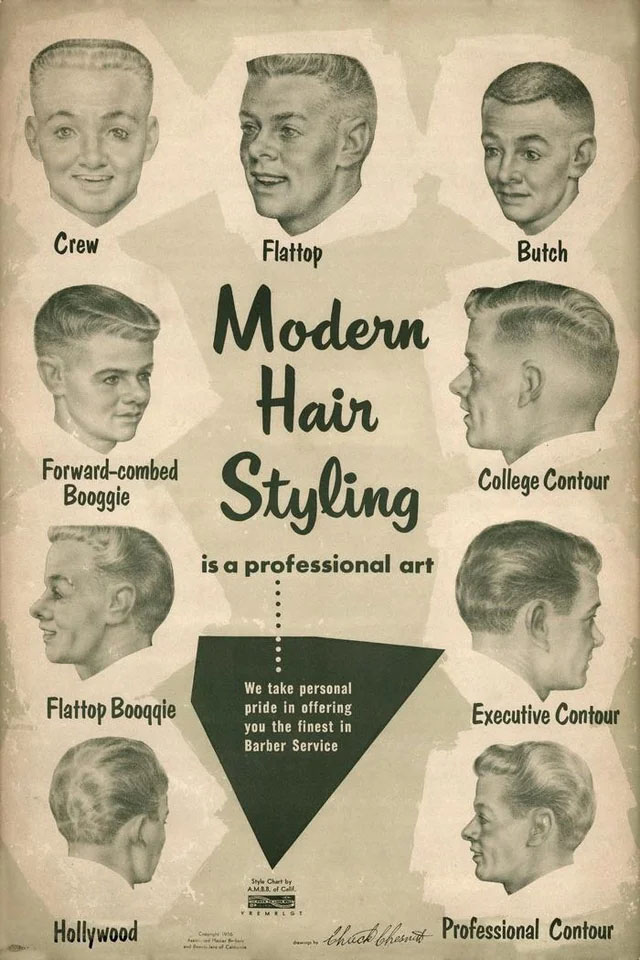
Modern Hair Styling 1950s
Budweiser - 1950s
This outdated Budweiser ad features a few glaring issues by today’s standards: first, the fact that the husband’s wife and his friends’ wives were not included in their game night, yet the wife was still expected to be the one who provides the refreshments. Next, the company actually takes the credit for the wife remembering to buy the beer!
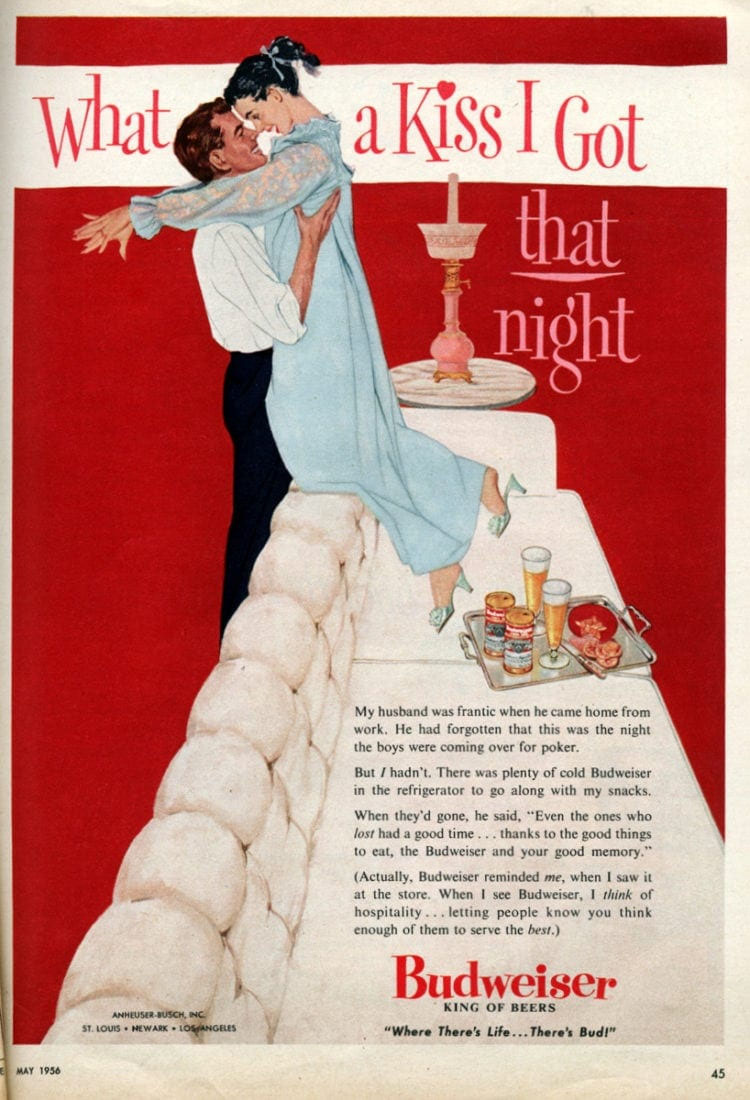
Budweiser 1950s
Hormel - 1970s
Due to the economic turmoil during the 1970’s, a lot of people were looking for ways to save money, even while grocery shopping. Hormel decided to step in and promised that their canned beef stew could provide a hearty, non-vegetarian meal without breaking the bank. Today, you’d likely see an ad trying to convince you to eat a vegetarian meal rather than a beef stew.
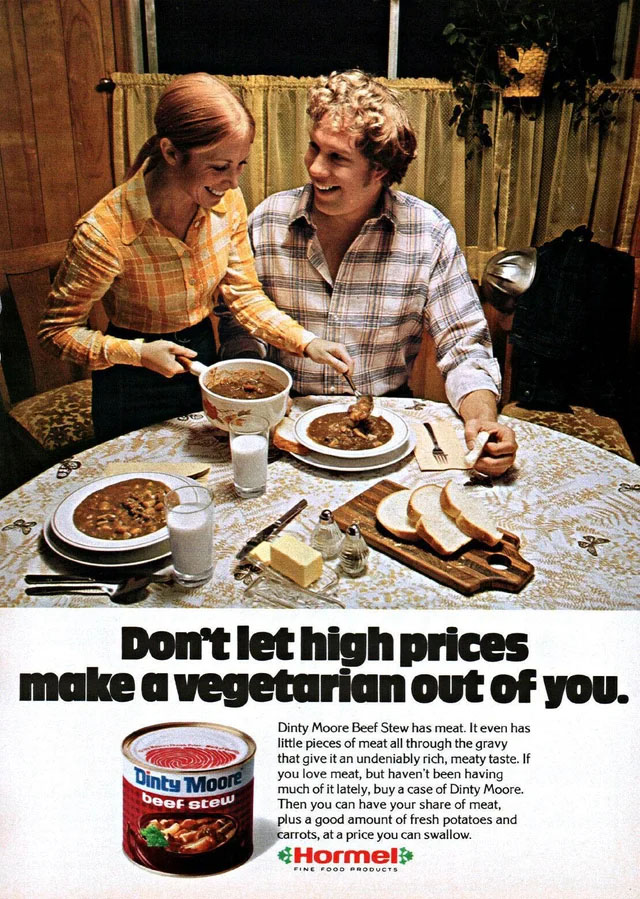
Hormel 1970s
Leggs - 1970s
This ad is perhaps the worst offender, as you can see that Leggs chose to literally dehumanize the woman in the ad and encouraged men to walk all over them, all for a pair of pants. There is absolutely no way that a company could get away with such a misogynistic advertisement these days, but that’s how things were back then.
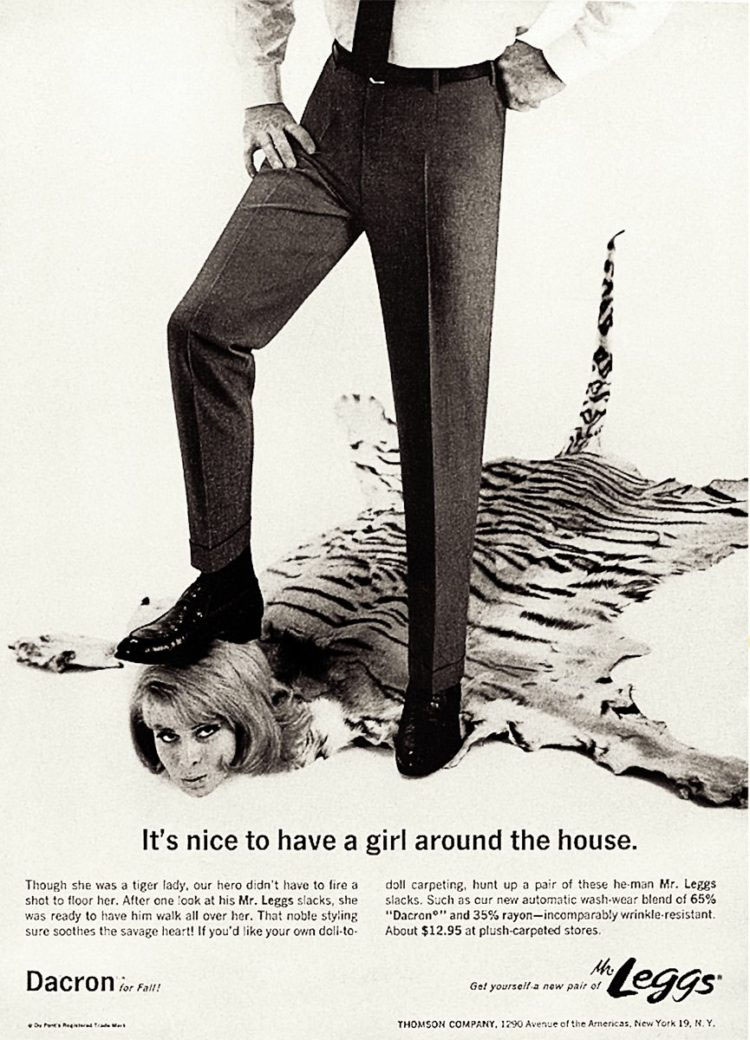
Leggs 1970s
Nichols Industries Inc - 1950s
As mass shootings have become more commonplace in the United States, we think that advertisements like this one would not be able to fly anymore, especially since this very realistic toy gun is being marketed to children. Back then, the selling point was the fact that it was so realistic and included many true to life features.
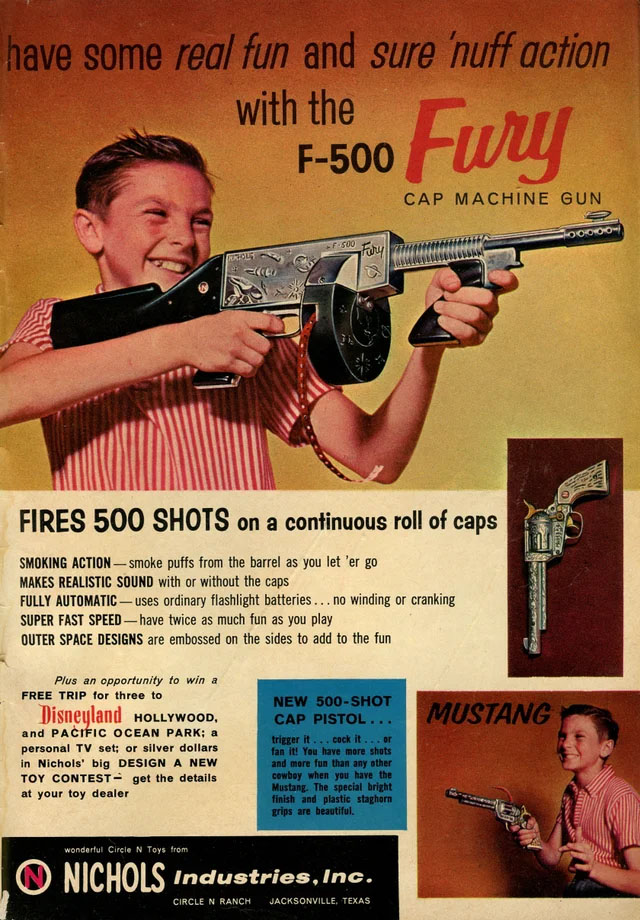
Nichols Industries Inc 1950s
Kohler Bathroom Fixtures - 1960s
This Kohler ad could not be more 1960’s if it tried. From the avocado colored sink, toilet, bidet, and bathtub, wood panels, to the garishly colored tiles, most people would not choose this aesthetic for their home today. We hope that this style stays firmly in the past and won’t make a comeback.
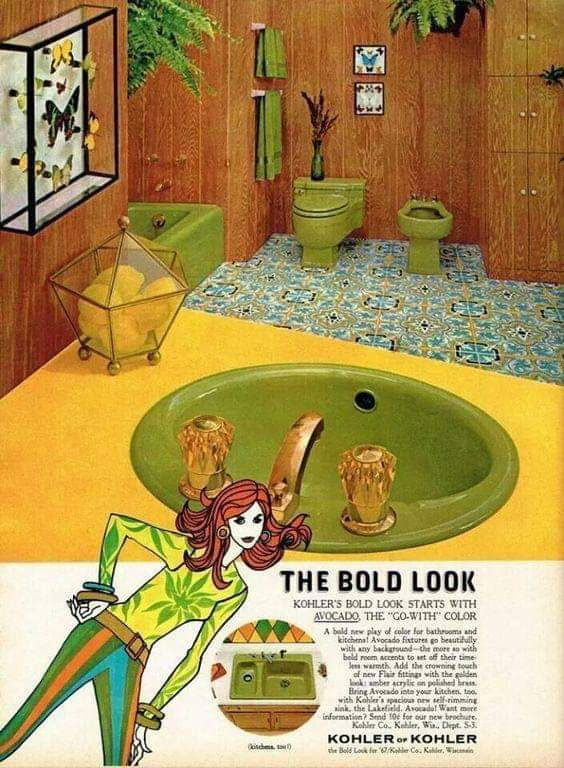
Kohler Bathroom Fixtures 1960s
Airflow Company - 1980s
Gone are the days where an advertisement would include an article that takes up a quarter of the page. These days, we’re a lot more about “less is more.” This ad was also hypersexualized, considering that the ad is for air conditioning. Also, we don’t really have “computer rooms” anymore thanks to portable laptops.
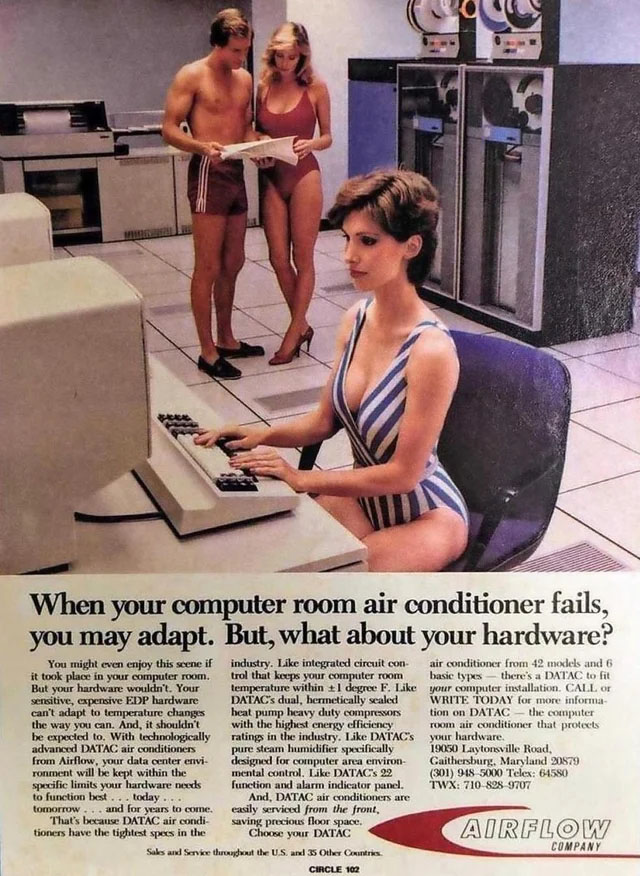
Airflow Company 1980s
Sears - 1910s
can you believe that department store Sears used to actually sell entire homes? In fact, you could be the proud owner of a 12-bedroom house for just $6000! Even with inflation, that price it unreal by today’s standards. A lot of people now can’t even dream about purchasing a home at all.
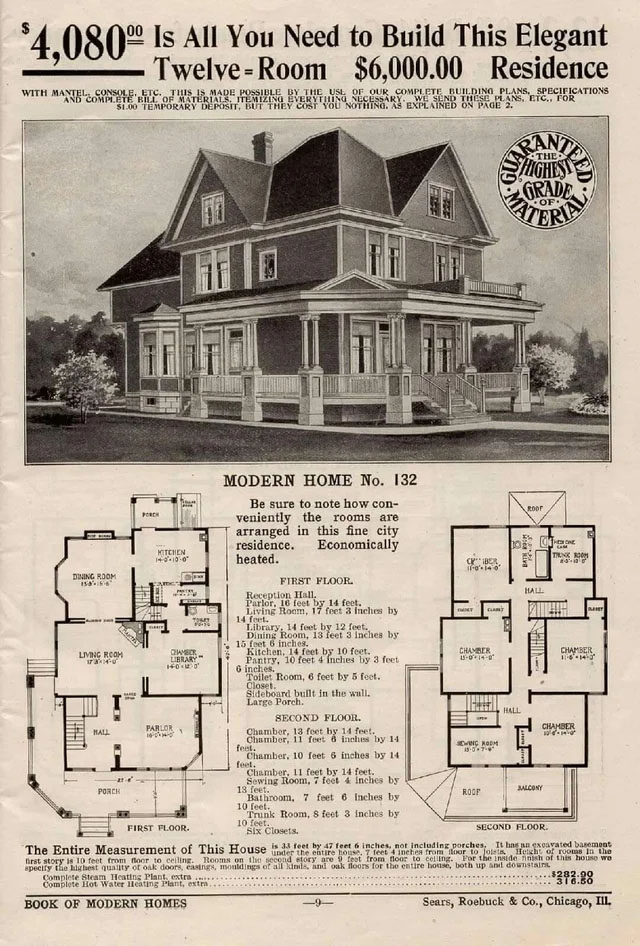
Sears 1910s
Cigar Institute of America - 1960s
In the 1960’s, demeaning and sexist ads like this one were very commonplace. In this cigar ad, you can see a modern man being compared to a cave man that’s treating a woman like his property. The company is implying that smoking their cigars will make you so manly that you’ll actually become more primal, which today is really not considered to be a good thing.
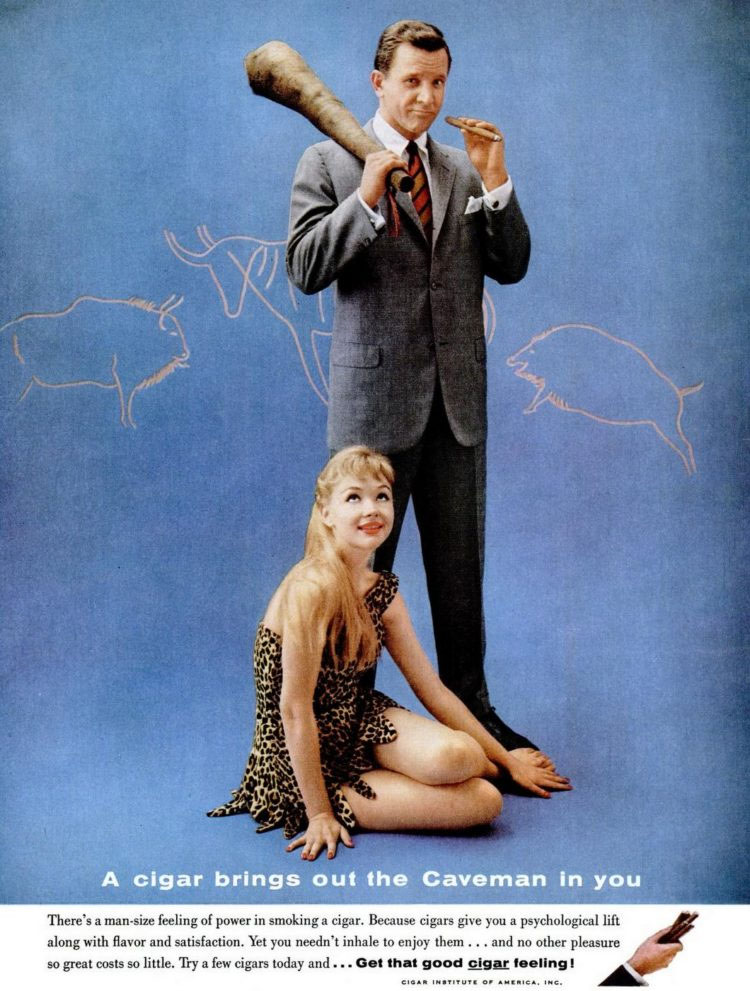
Cigar Institute Of America 1960s
Sears Pikes Peak Hill - 1960s
Here’s a nice and wholesome ad from the 1960’s for a change. In this Sears Pikes Peak Hill ad, you can see a family gathered around the toy set and enjoying the wonder of it all together. We must say, this still looks like quite an impressive setup today.
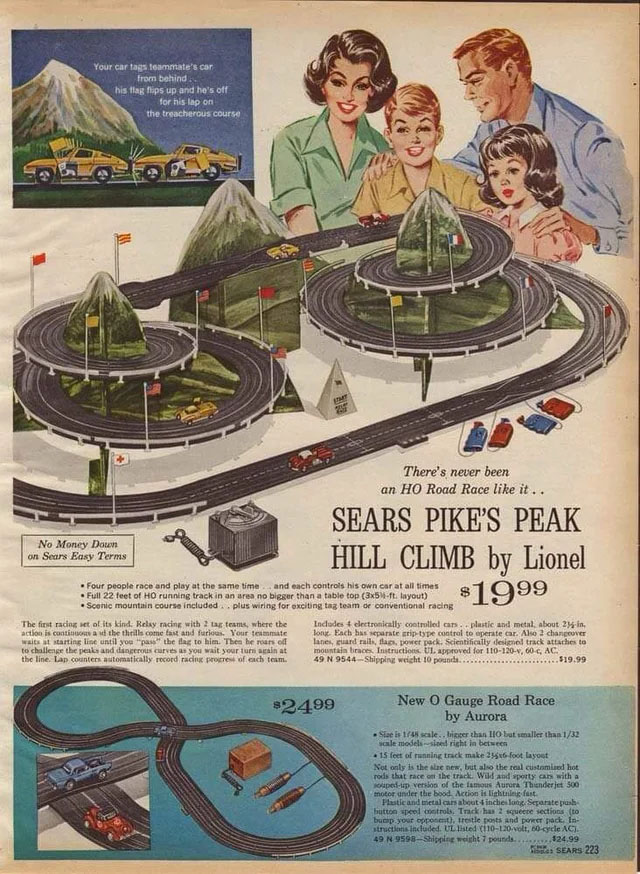
Sears Pikes Peak Hill 1960s
Lucky Tiger Hair Tonic - 1950s
This Lucky Tiger Hair Tonic ad from the 1950s was trying to be clever, reversing the role of hunter and hunted, with the tiger being the one that hunts. However, the fact that that the mounted heads are all of women, combined with the line “Lucky Tiger gets the gals,” it leaves a bad taste in our mouths. Luckily, ads like this can’t exist today.
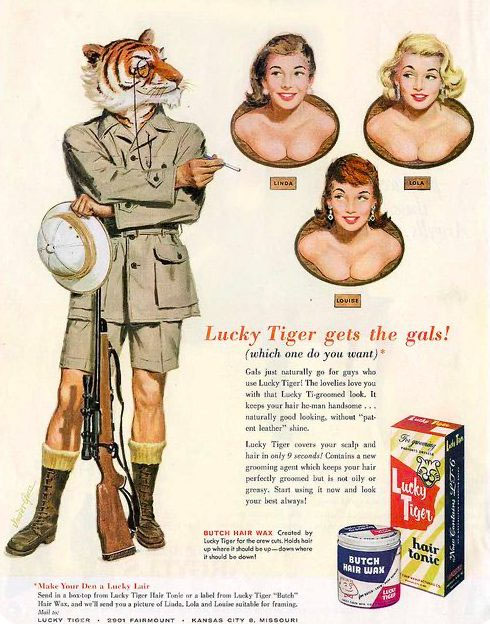
Lucky Tiger Hair Tonic 1950s
Tart-Chestnut Co - 1930s
During the 1930s, this Tart-Chestnut product’s name was not considered to be inappropriate and is a great example of how over time, words’ meanings can completely change. “Big Tits” was actually just the company’s nickname.
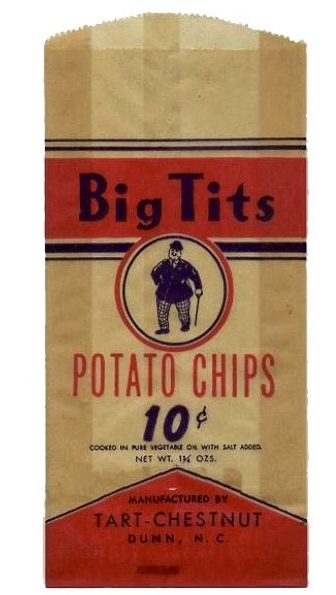
Tart Chestnut Co 1930s
Sony - 1960s
While upon further inspection you can see that the man in this advertisement is actually filming birds in their nest, it is still quite odd that this man has an entire video camera setup up in the tree with him. It gives off a slightly creepy vibe.
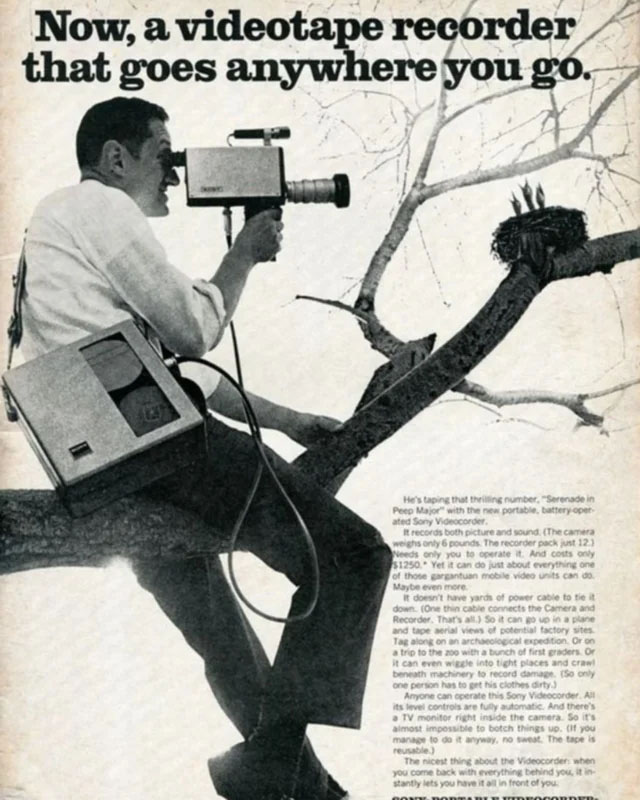
Sony 1960s
Kellogg’s - 1930s
During the 1930’s, Kellogg’s decided to get in the vitamin game and we can see that their ad was suggesting that their vitamins would give women such vitality, they could actually work even harder on their homes while also looking cuter for working harder. Luckily such a ridiculous message wouldn’t cut it now.
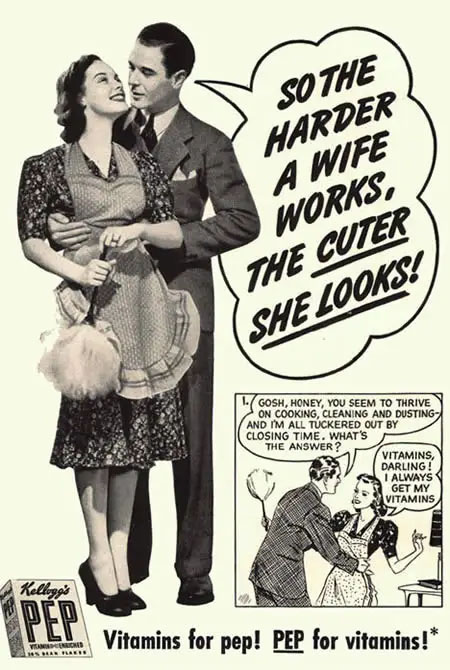
Kellogg’s - 1930s
Toothache Drops - 1885
In 1885, cocaine was not only legal, but was being marketed as a helpful toothache remedy. These drops contained cocaine in them, and while we’re sure that they helped with the toothache, they probably became way too addictive. It’s also crazy that there were kids in this cocaine toothache drop ad.
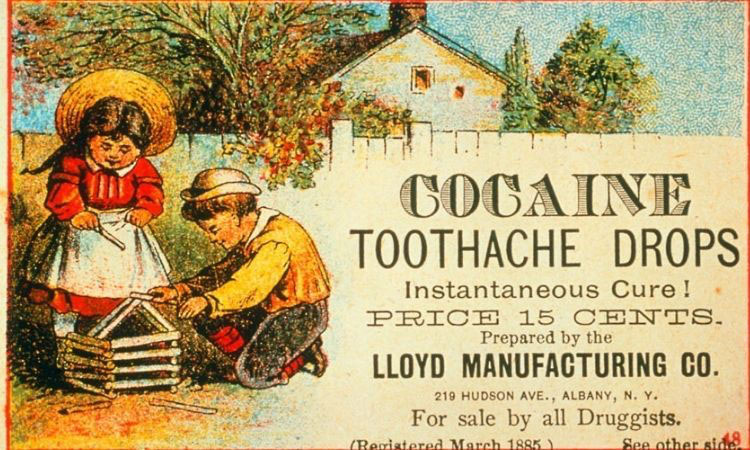
Toothache Drops 1885
Camel - 1940s
It is truly outlandish to see that Camel, the cigarette company, was actually promoting their cigarettes by saying that their cigarettes were the ones that doctors themselves smoke! This was before people were more ware of just how horrifically dangerous smoking cigarettes really is and any doctor that would promote smoking would certainly get in trouble.
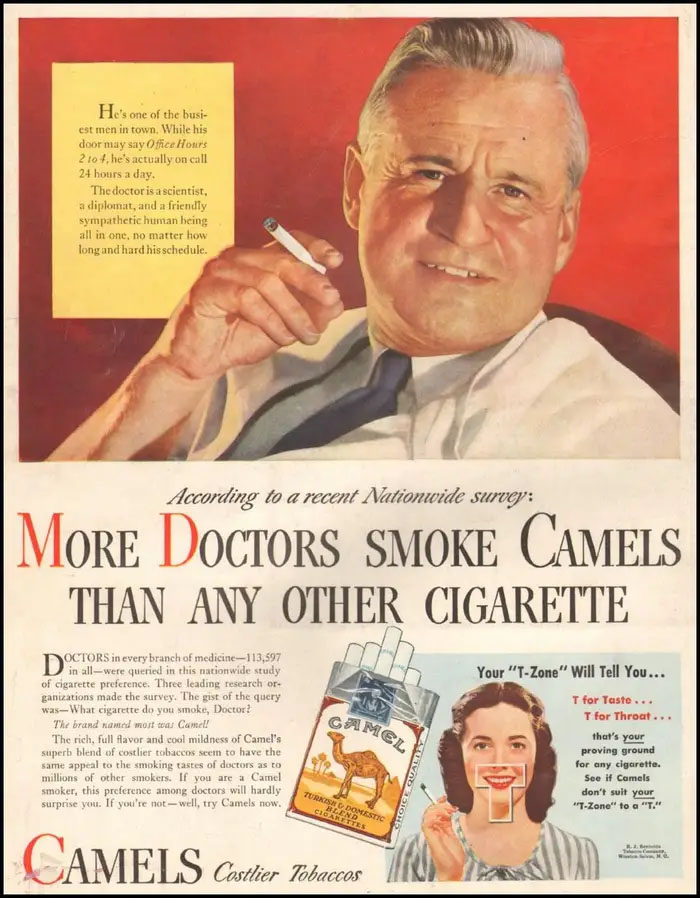
Camel 1940s
Sony - 1980s
Duting the 1980’s the Sony Walkman was at the peak of its popularity. This ad is actually quite nice, as it captures the fun energy of roller skating around while listening to music and wearing brightly colored outfits. The one thing that would be different today would be that the kids in the ad would be shown wearing helmets and protective gear.
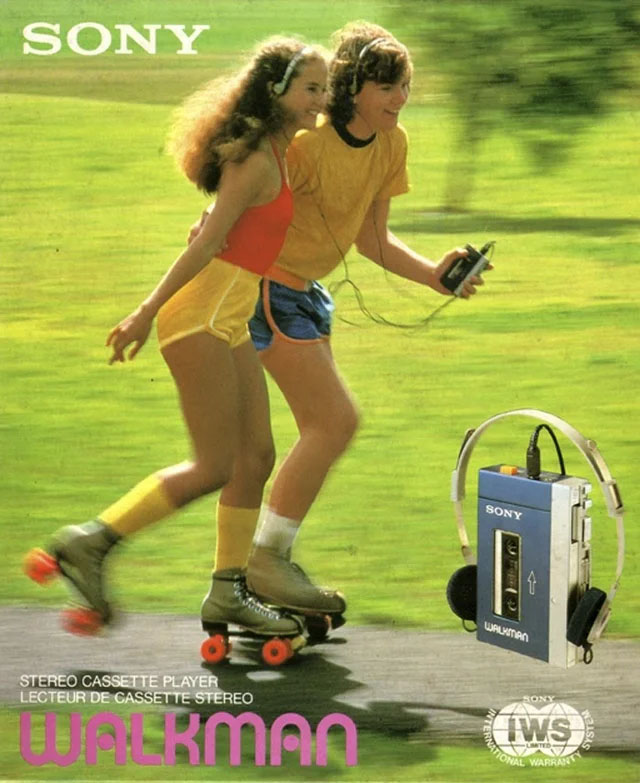
Sony 1980s
Bell and Howell Projector - 1950s
Here is yet another example of an advertisement from the 1950’s that uses women’s bodies in order to promote a product. Here, Bell and Hower was using “Sabrina’s” body and some word play to promote their color slide projector.
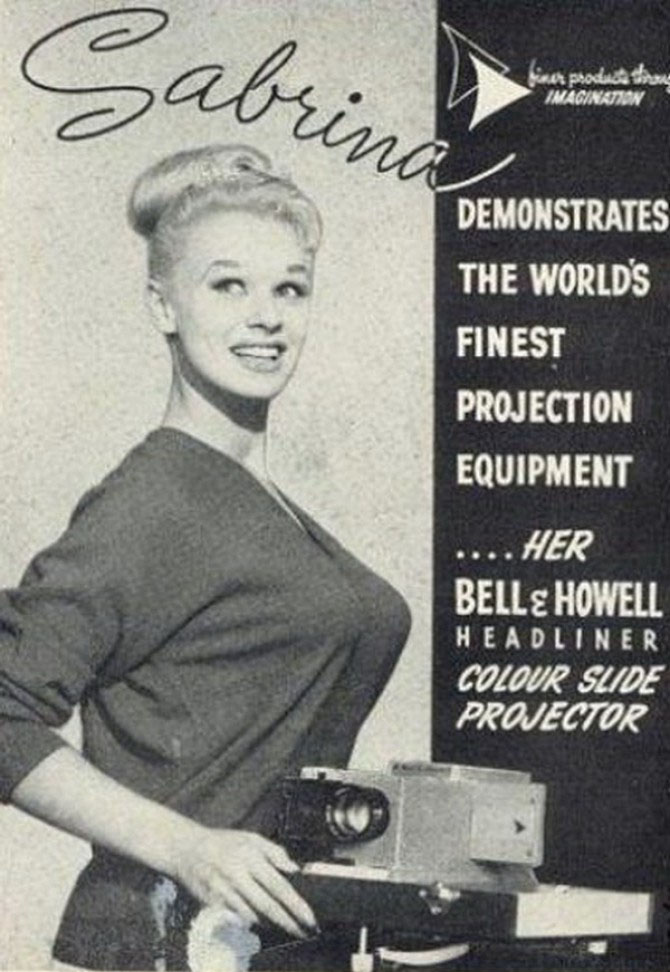
Bell And Howell Projector 1950s
Plymouth - 1940s
This 1940’s Plymouth advertisement features so much text, to the modern eye it is just so overwhelming. It’s wild to think that this is how ads were back then, and today it would never work. Nobody has the patience to read a few lines, let alone an entire page’s worth of text.
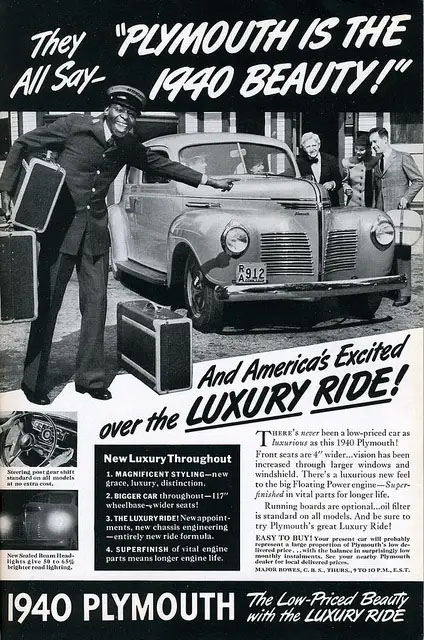
Plymouth 1940s
Out Of The Closet Inc - 1970s
This one is a tricky one. On the one hand, it’s interesting that a “Gay Bob” doll was released during this time period at all, it probably was not done with positive intentions. It is quite offensive and relies on stereotypes, something like this would definitely not be done today.
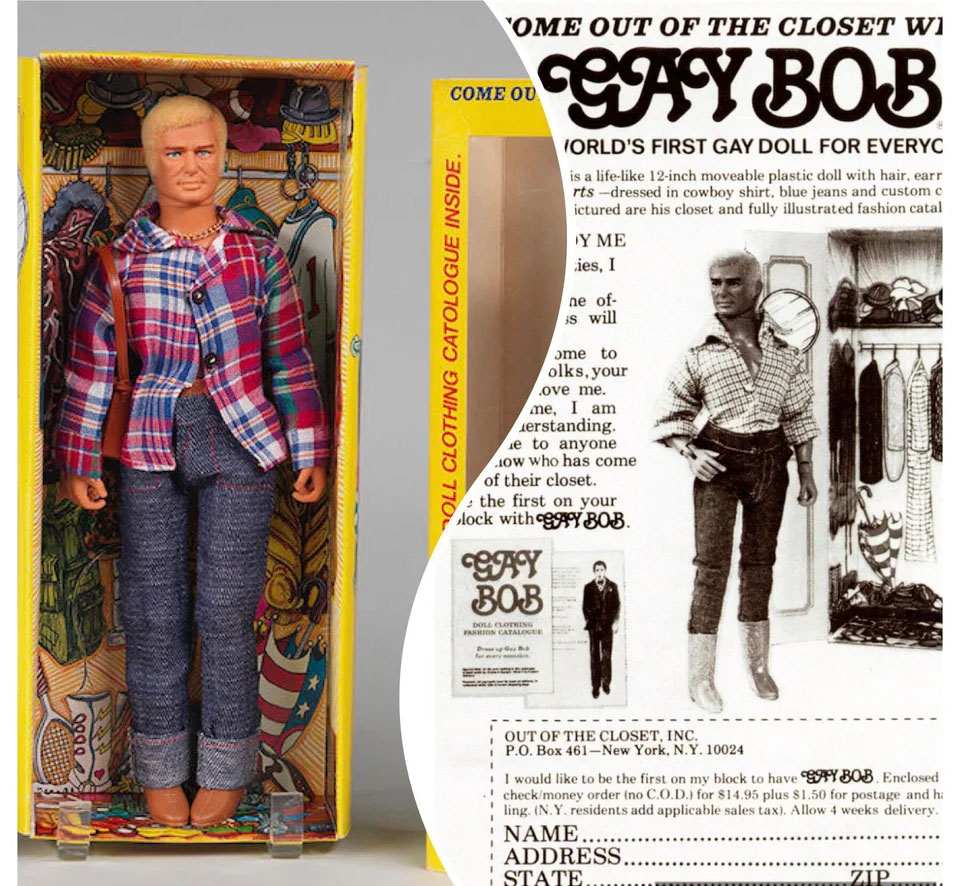
Out Of The Closet Inc 1970s
Radio Shack - 1970s
Up until recently, Radio Shack was the go-to store when it came to anything related to electronics. However, huge corporations like Best Buy eventually overtook the mall staple and eventually crushed it, leaving it to file for bankruptcy multiple times.
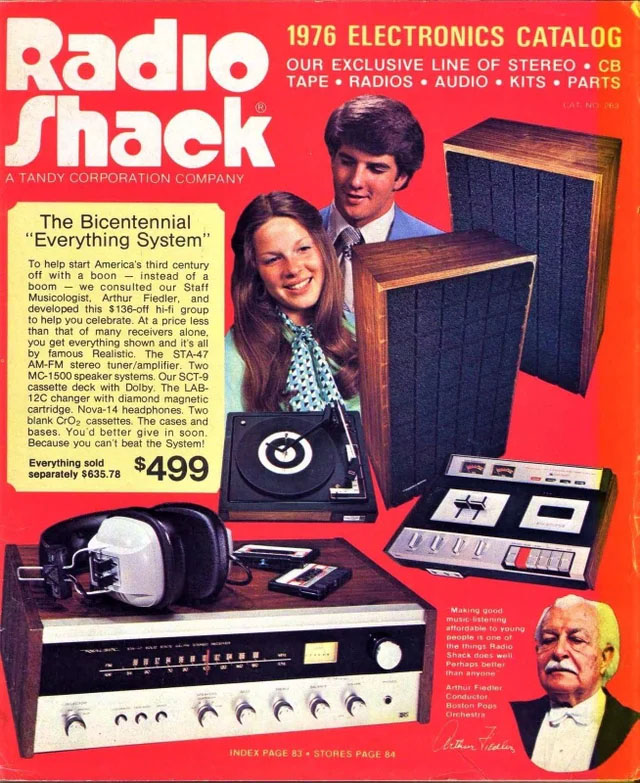
Radio Shack 1970s
McDonald’s - 1970s
Considering the fact that this was the 1970’s, you could say that this was McDonald’s attempt to be more inclusive. However, looking at the wording chosen for this ad today, it feels pretty cringe-worthy due to the fact that it is full of stereotypes.
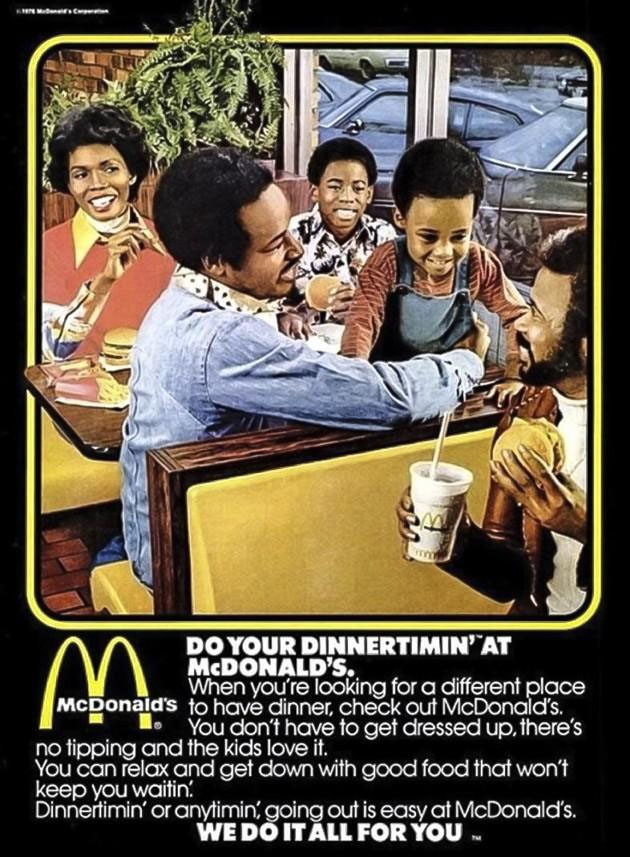
McDonald’s - 1970s
Larsen Company - 1949
While there is nothing offensive in this ad from the Larsen Company, we can’t help but say that it is truly unappetizing. The thought of 5 different vegetables crammed into layers in a single can is really unappealing. We’re sure that this was a much more popular idea back then, but fresh is always better.
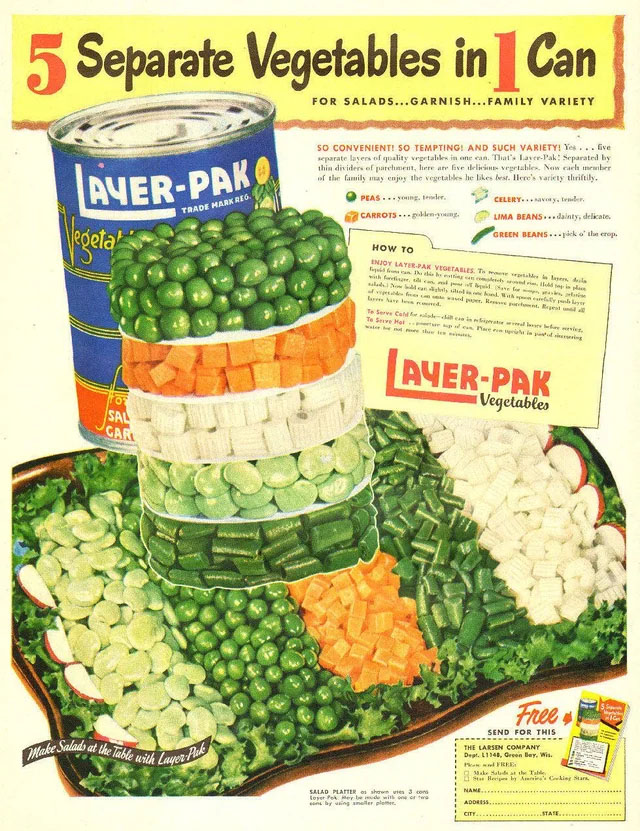
Larsen Company 1949
Schlitz Beer - 1950s
Yes, Schlitz Beer had multiple sexist ads that ran in the 1950’s. This one shows a distraught wife who is upset that she burned the dinner she prepared for her husband. However, her husband assures her that it’s no problem, since she “didn’t burn the beer.”
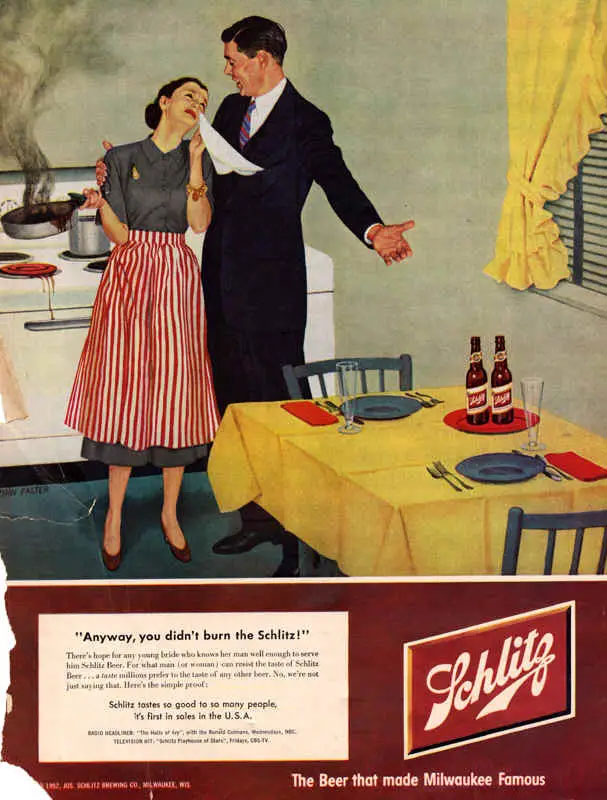
Schlitz Beer 1950s
Western Electric - 1950s
It is quite interesting to see what Western Electric imagined future phones to look like. While we give them points for creativity, we can’t help but point out that they were pretty off. In fact, forget about touch screens, the “future” phone still has a cord!
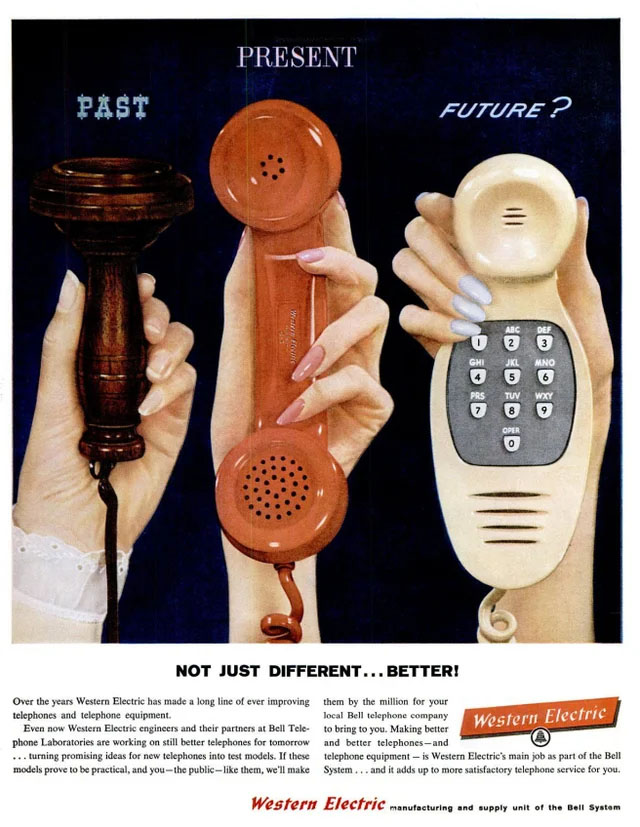
Western Electric 1950s
Martini & Rossi - 1960s
This Martini & Rossi ad from the 1960’s is truly bizarre. Why is the woman in a cage being compared to their product? Why is the woman in a cage at all? The fact that we have all of these questions shows that this is really not such a great ad like they hoped.
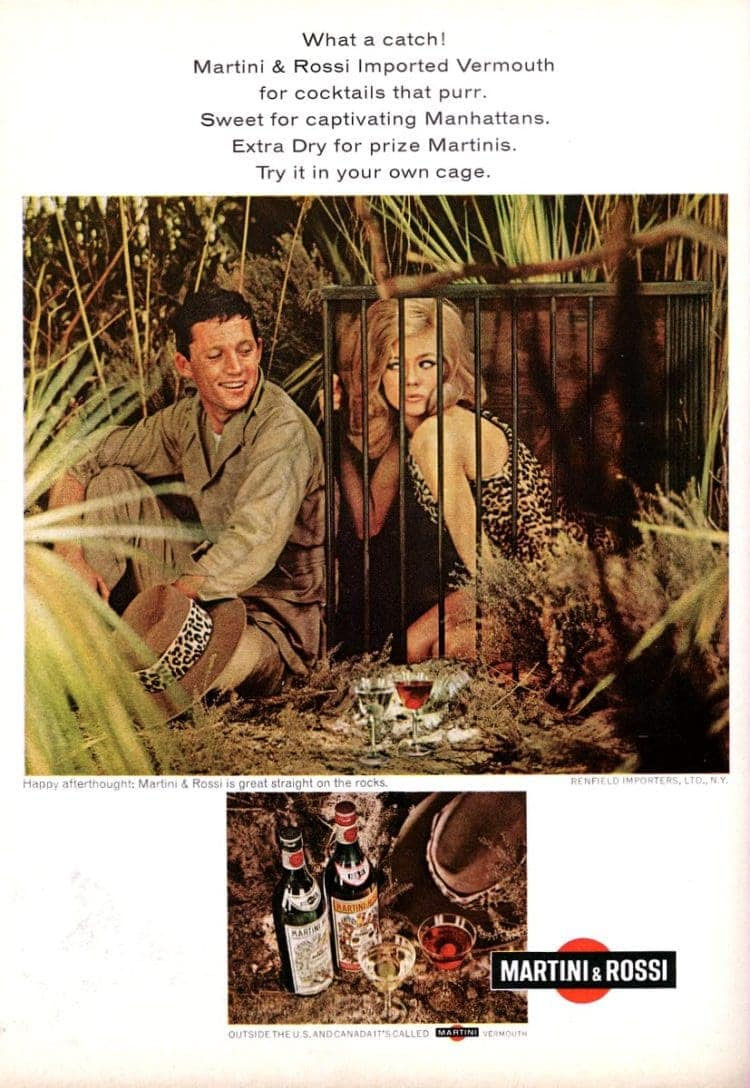
Martini Rossi 1960s
Honda - 1970s
It’s pretty wild to think that an advertisement from a major car manufacturer like Honda would blatantly put out an ad that said “women don’t understand rack-and-pinion steering.” However, if you take a closer look, you’ll see that the company is actually saying that women like cars for the same reason that men do, so in a strange twist, this isn’t a sexist ad after all. It’s still a very strange one, though.
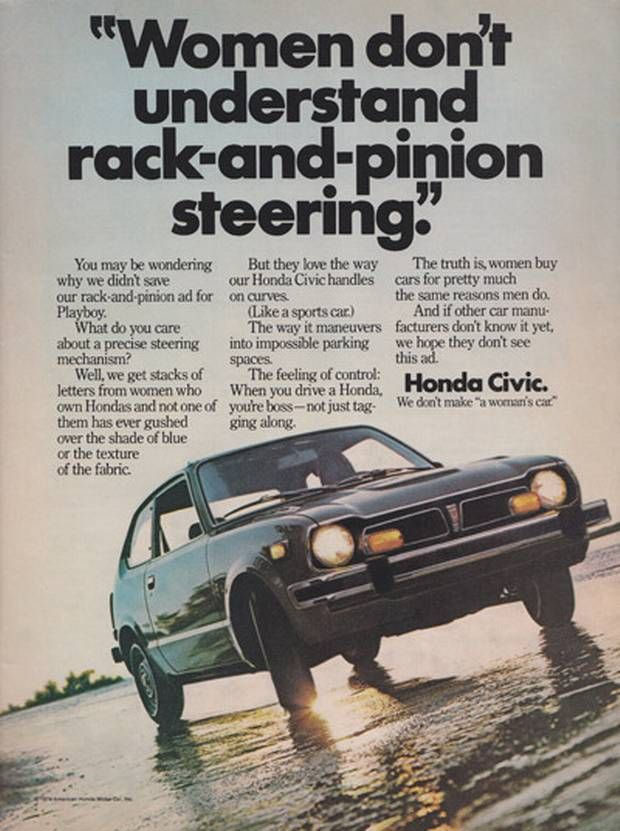
Honda 1970s
7-Up - 1950s
This kind of advertisement would never be able to be run today, since it shows a little baby drinking soda, which is definitely not a good idea considering how unhealthy soda is for everyone, but especially a growing baby. In fact, many people are trying to ban soda ads for young kids in general now.
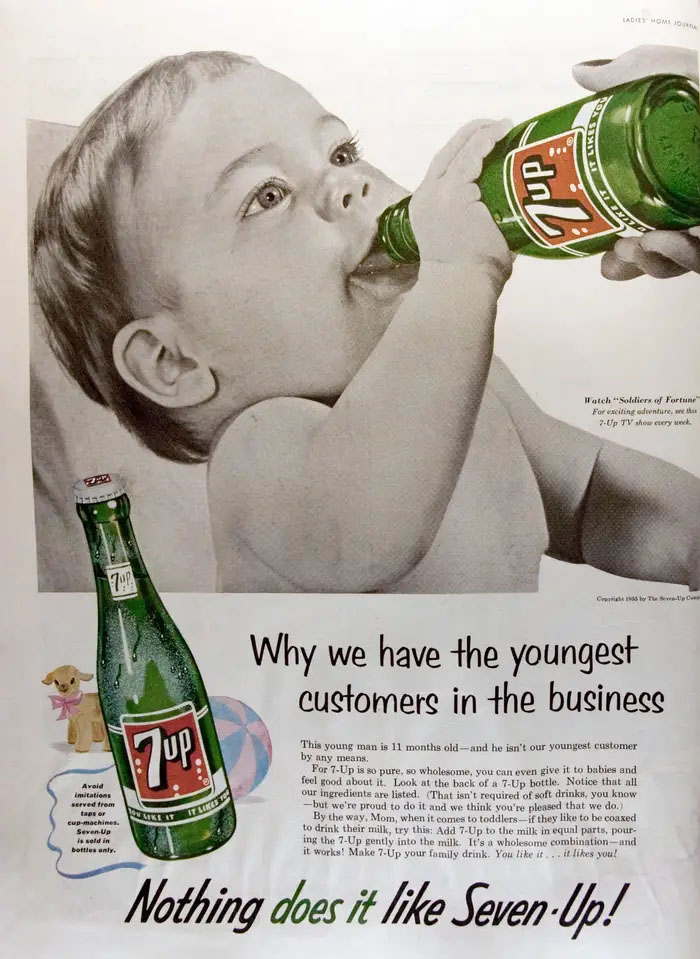
7 Up 1950s
Texaco - 1943
This strange ad ran in 1943 and was meant to be hopeful by showing a little girl asking who Hitler was, as in saying that one day, people won’t even know who he was. While that’s an interesting idea, hopefully we don’t forget history, as that’s how it repeats itself. However, at least this ad was trying to be hopeful about a future not run by a madman dictator.
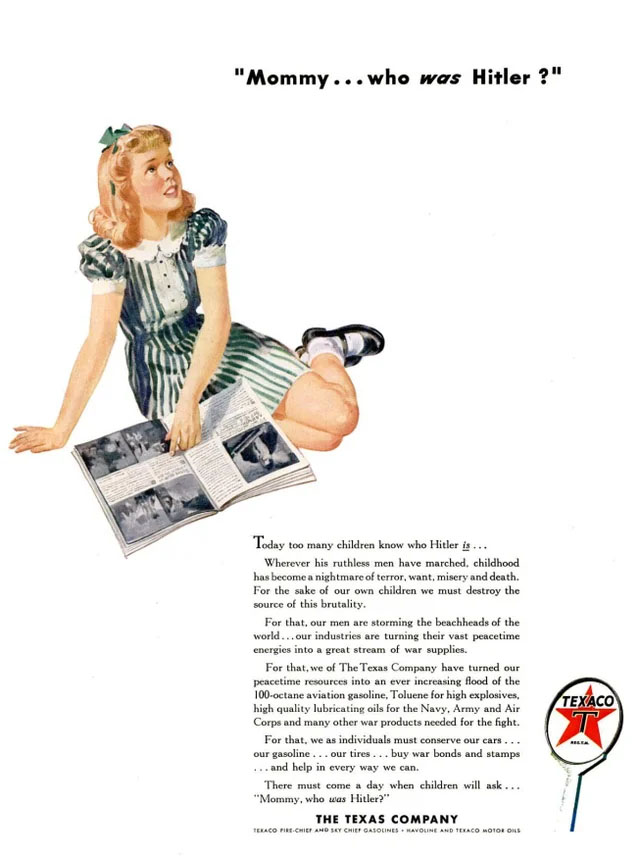
Texaco 1943
Van Heusen - 1950s
This Van Heusen ad used classist tropes to try to sell its shirts, making it look like anyone who doesn’t buy their brand’s Oxford shirts is not civilized. That implies that tribal men are somehow lesser, which is considered to be in poor taste these days.
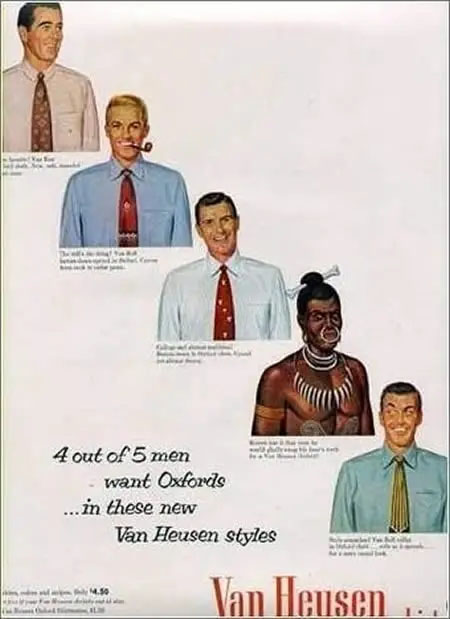
Van Heusen 1950s
Best Buy - 1999
Ah, the great 2KY scare. On the eve of the new millennium, way too many people felt anxious that the world would be ending. Lots of brands like Best Buy leaned into this panic and even ran this ad that reminded people to turn off their computers before midnight that night in order to “protect” themselves.

Best Buy 1999